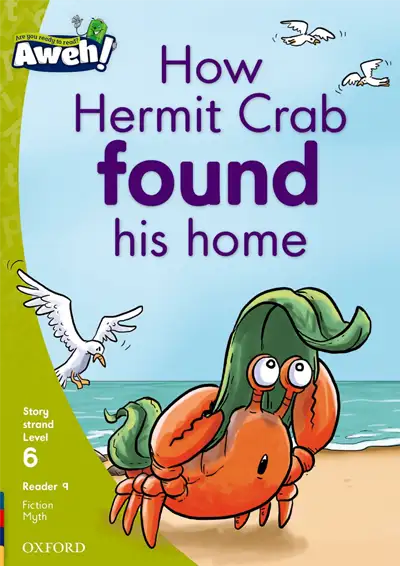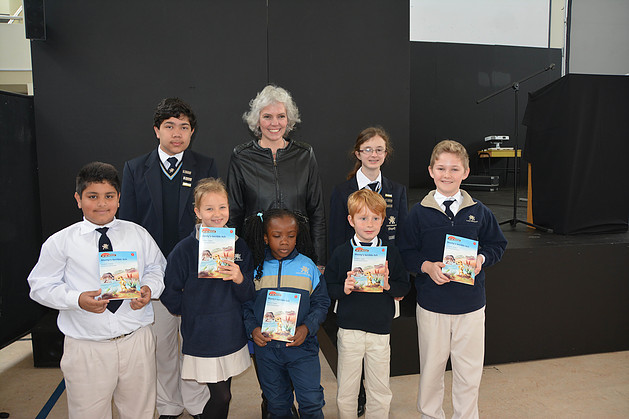

Writing Educational Readers for the Foundation Phase is a little different to writing picture books. Here are my top 10 tips from more than 10 years of writing them.
1
Stick to the brief
Why am I telling you something that seems so gob-smackingly obvious? Well, it’s because some authors don’t! One work I came across was written with just over 200 words when the requirement was over 500! Educational readers are levelled and graded to the reading abilities of school children. The publishers go to a lot of effort to ensure growth in this area over the course of a year, and throughout the Foundation Phase. The brief provided to authors ensures that all these boxes are ticked, from word count to new vocabulary. So, stick to the brief for best results.
2
Keep it simple
Don’t aim for a complicated plot and storyline that won’t work within the restrictions of the brief. First, understand all of those parameters, and build your idea for a story around that.
3
Steer clear of abstraction
Very young readers require literal meaning for understanding. Therefore, abstract thinking and sentence construction can lead to confusion. In general, steer clear of abstraction unless your publisher specifically requests it.
4
Artwork is key
Educational readers rely on strong and engaging artwork to support the writing. It is imperative that you have a vision of each page of your story and that you are able to communicate that well through a thorough art brief. This may require you to specify exactly what you’d like to see in the foreground, middle ground and background of each page, whether it is a single page or DPS (double page spread), and levels of detail for elements such as character expressions and movements, etcetera.
5
Phonics are fun.
Personally, I never learnt to read using the phonic alphabet, but most children do today. Phonics are therefore an important part of the brief (see point number 1). Phonics can often extend beyond the words you’ve included in your story to the visuals in the artwork. Remember to include as many of the sounds as possible that children are focussing on at school.
6
Expect comments and changes from your publisher
Creating educational readers for a reading scheme is a collaborative process. Everyone’s objective is to tick as many of the brief’s boxes as possible to ensure that the end product is approved and endorsed by the department of education, and that your book sells. This requires versioning and tweaking of your original manuscript until a final product is approved. Don’t lose heart with this, keep plugging away and learning from the comments and suggestions from your editor and publisher until everyone is happy with the end result.
7
It can be a challenge.
Sometimes a brief can be difficult. I recall a particular book where the character I needed to write about owned a pet cat. The phonics the story required were ‘d’ and ‘g’, so, of course, it would have been better for him to have owned a dog! Challenges can also be encountered where genres such as myths, fables, mystery, etcetera, seem at odds with the theme you’re writing about. This definitely calls for author creativity and new ways of thinking!
8
Restrictions force creative thinking
This stems from point 7 above. The restrictions placed on authors by the brief are actually an enabler for innovation and creativity. It is those very restrictions (making your brain jiggle!), that force you to think outside of the box for your story and to come up with something new and exciting. Therefore, don’t just start writing without doing a lot of thinking first. I take inspiration from Einstein’s famous quote for this: “If I had an hour to solve a problem, I’d spend 55 minutes thinking about the problem and 5 minutes thinking about solutions.”
9
Don’t forget – Your editor is your friend
Build a good relationship with your editor. I always try to surpass expectations by delivering before a deadline, if possible. I also value the input that my editors give in terms of content and suggestions. They have a wealth of experience and expertise in the field, and their contributions are vital in creating a polished end product. This relates to point 6 above.
10
Include diversity wherever possible
Diversity is so important in multi-racial and multi-cultural societies. Aim for diverse representations in your manuscripts as far as possible. This is often already included in a brief, but always keep it in mind whenever writing educational readers.
Writing educational readers is both fun and rewarding. The most satisfying aspect for me, is to know that my books are being read and enjoyed by children as they grow and move through the grades on their way to adulthood.
I hope that what I’ve shared here has been both interesting and useful to you.
Find and view some of my educational readers in the book catalogue on this website.