
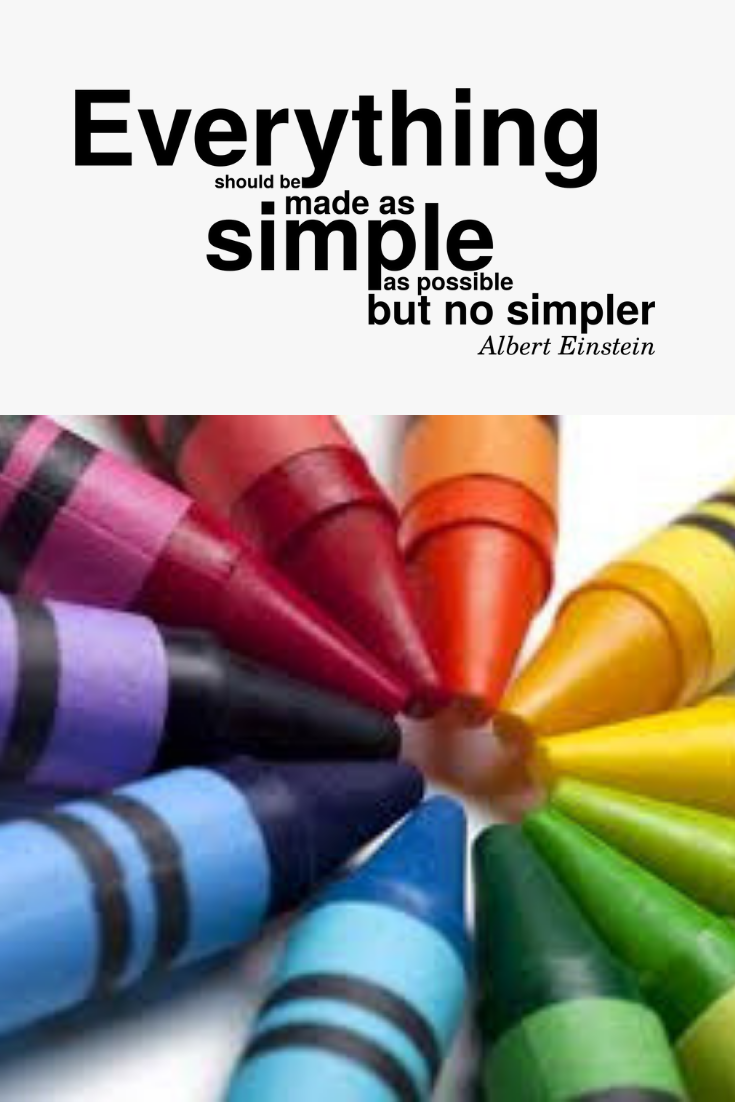
These wise words from the great Albert Einstein resonate strongly with me as a writer of children’s books. Another great proponent of simplicity was Leonardo da Vinci, who famously said: “Simplicity is the art of sophistication.” So why then do we often overlook the simple in favour of the complex? Do we believe that writing something simply just isn’t “clever” enough?
Some people might mistakenly believe that writing children’s books is easy peasy. Why shouldn’t it be easy? There are so few words in relation to an adult novel, and indeed some picture books have hardly any words at all. But here’s the rub: making things simple is in fact one of the hardest things to do. Have you ever tried answering a four or five-year old’s question: Why Daddy?, Why is there a rainbow in the sky, Mummy?, Why does that lady walk funny?…and so on. It’s no good giving a child of that age a scientific explanation of how a rainbow is formed (even if you can do so). You have to find words that make your answer simple and understandable. If the child doesn’t like your answer, they will simply continue with a whole string of Whys? until they do. And by the way, answering with “because that’s the way it is” or “I’ll tell you when you’re older” is simply a cop out.
In fact, it’s good practice to chat to small children if you’re a children’s book author. Their curiousity and enquiring minds reawaken those qualities in an adult. Some of us have forgotten how to question things and we just take everything as it is and forget to ask Why?. In addition, very young children have a limited vocabulary and so will only be able to choose simple words to express themselves. They also tend to only understand literal meaning at this stage of their development. In other words your words as an author say exactly what they mean: “The ball is red.” “Sally feels sad.” It is no good describing things figuratively to very small children: “The ball looked like a red balloon floating in the sky.” or “Sally cried her eyes out.” A small child might literally think that Sally’s eyes popped out of her head! Figurative language should therefore be used cautiously with little children and be reserved for older children who have developed an understanding of the nuances of meaning and that words don’t always say exactly what they mean.
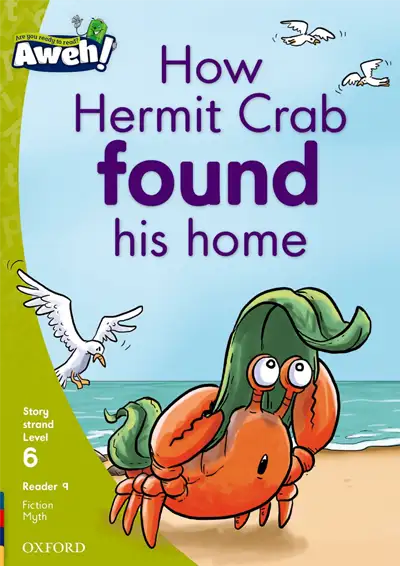
I have personally had experience writing for the foundation stage of the educational market, and that is certainly an exercise in simplicity. Moreover, my books, written in English, had to cater for children whose first language was not English. Often specific educational books must use:
- certain phonics,
- certain common words,
- a limited number of words per page,
- a limited number of pages per story, and
- a limited number of words per sentence.
Although this can be frustrating at times, it’s a wonderful lesson in both creativity and simplicity for an author. You HAVE to find the simplest, shortest, most meaningful way of writing in order to fit the brief and have your manuscript accepted by an educational publisher.
Ditching the complex in favour of the simple, can be a challenge. It’s often the case that you want to say more, you are dying (not literally) to use your adult style language and figurative skills in your stories to showcase your abilities as an author. To this I say, remember your audience! You are writing for children, and your work should only be judged by their enjoyment and understanding of it.
To come back to Einstein’s famous quotation, “Everything should be made as simple as possible, but no simpler”, I believe Einstein is making the distinction between simple and simplistic. An oversimplified story or explanation can appear patronising to a young reader and can be as unenjoyable as a complex story to them. So be careful of not resorting to the simplistic when writing your story.
In conclusion, don’t underestimate the power of simplicity, think of the beauty in the Zen simplicity of the Japanese culture, the single rose is just as beautiful and meaningful as an entire bunch, and if the great masters of history, both scientific and cultural, believe in simplicity, then I guess we should too.

I loved reading this blog content. It’s made me understand that you should understand what kind of audience you’re presenting to. Rather than using your own understanding of the subject matter to communicate, know “how” to communicate it to your audience.
Wise words Louise. We can often get caught up in trying to perfect something so much that we over-complicate it. And our children are often our best reminders of how simpler really is often better.